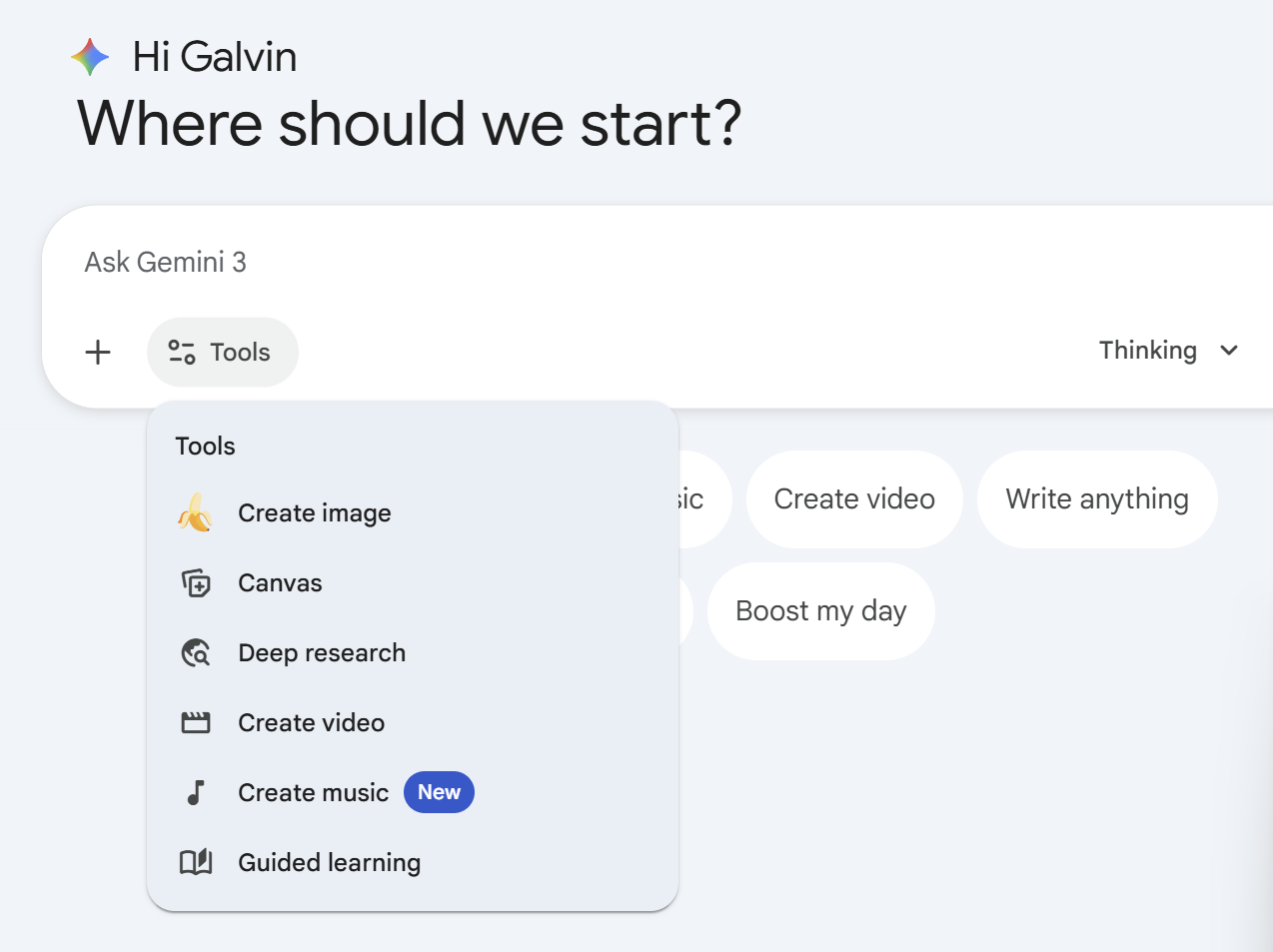
Google just turned Gemini into a “create music” tool. It’s powered by Lyria 3, and it can generate 30-second tracks from a text prompt, and in some cases even from a photo/video vibe. It’s rolling out gradually, so some people will see it earlier than others.
This is not “professional studio production.” It’s best seen as a rapid soundtrack and learning asset generator: quick intros, microlearning cues, mood tracks for presentations, creative prompts for student work.
How to use it:
1. Open Gemini and look for Create music (feature is rolling out).
2. Describe what you want: genre + mood + tempo + instruments + use-case (e.g., “intro music for a student pitch”). Optional: add lyrics if you want vocals, or specify “instrumental only”.
3. Generate, then keep iterating with constraints: “less busy”, “more upbeat”, “more cinematic”, “no vocals”, “add soft percussion”.
4. For safety and professionalism: avoid prompts like “sound like [famous artist]”. Senang cerita, don’t try to clone anyone’s signature sound. Google says it applies protections to reduce copyright risk.
How this becomes genuinely useful in higher ed:
The win is instructional design + engagement + assessment creativity without adding workload.
1) Microlearning “attention reset” cues (Teaching workflow)
Use 8–12 second clips as section transitions in lectures:
• Intro cue (start of class)
• Activity cue (group work starts)
• Reflection cue (silent writing)
This reduces time wasted on “okay guys settle down” energy. Confirm this matters in real classrooms.
2) Marketing, Entrepreneurship, Media: audio branding tasks (Assessment)
A clean HE assessment: 30-sec sonic identity for a brand.
Students submit:
• the track (Gemini-generated is allowed)
• prompt log (what they tried, what they changed, why)
• target persona + brand positioning rationale
• ethical statement (no artist mimicry, no copyrighted samples)
This becomes a strong “AI-era” authentic assessment because you mark decision-making, not just output.
3) Case-based learning: “mood soundtrack” for scenarios (Teaching + discussion)
For modules like Consumer Behaviour, OB, strategy:
• Generate 3 tracks for the same case (optimistic, tense, uncertain)
• Ask: “How does mood framing change perceived risk, trust, fairness?”
Students realise context changes interpretation. Itu yang kita nak, deeper thinking.
4) Student presentations: reduce dead-silent openings
Most student slides start cold. Give them a structured opening:
• 5 seconds: intro sting
• 10 seconds: title + hook statement
• then content
It sounds small, but it improves perceived professionalism a lot.
5) Learning analytics support: “audio recap” template
Use music lightly under a 60-second recap voiceover (your own narration). It turns weekly recap content into something students actually replay.
Copy-paste prompt pack:
1. Lecture intro sting:
“Create a 30-second instrumental intro for a university lecture. Modern, confident, clean. 110 BPM. Light electronic + subtle percussion. No vocals.”
2. Tutorial activity cue:
“Create a 30-second instrumental background loop for group discussion. Calm, focused, not distracting. Soft lo-fi textures, minimal melody, no vocals.”
3. Student pitch soundtrack:
“Create a 30-second upbeat instrumental track for a student startup pitch. Energetic, optimistic, tech-forward. 120 BPM. No vocals.”
4. Case study tension framing:
“Create a 30-second cinematic track that feels tense but not scary. For a business crisis case discussion. Strings + soft hits. No vocals.”
5. Brand sonic identity:
“Create a 30-second signature sound for an eco-friendly skincare brand targeting Malaysian young professionals. Fresh, premium, clean. Instrumental only.”